
239: What They Never Taught You About Money in Med School
239: What They Never Taught You About Money in Med School


Med school taught you how to diagnose disease—not how to create financial freedom.
In this episode, I’m pulling back the curtain on the mindset shifts that completely changed my money philosophy—and my life. Spoiler: it’s not about how much you save or what you invest in. It’s about getting clear on what you actually want, and then building income-producing assets to support it.
We’ve been fed an outdated success formula: go to school, get a “good” job, save for retirement, and someday you’ll be happy. But what if there’s a better way?
Tune in to hear my updated take on wealth, work, and why you’re never behind (no matter what your bank account says).
What You'll Learn:
-
Why retirement is a broken concept—and what to focus on instead
-
The biggest financial lie we were taught in med school
-
What income-producing assets are and why they matter now
-
How to stop waiting for “someday” and build a rich life today
-
Why being a high-income earner isn’t enough to create real wealth
Featured on the Show:
Welcome to the Wealthy Mom MD Podcast, a podcast for women physicians who want to learn how to live a wealthy life. In this podcast, you will learn how to make money work for you, how you can have more of it, and learn the tools to empower you to live a life on purpose. Get ready to uplevel your money and your life. I'm your host, Dr. Bonnie Koo.
Hey, welcome to episode 239. Before we present the episode, I just want to let you know that I am starting 30 days of visibility. Now. You might be asking, what the heck does that mean? And so what that means is that for the next 30 days, I'm going to be going live on Instagram. And my handle, in case you don't follow me, is wealthymom md. All one word.
And what's the point? The point is to just consistently have a chat with y' all every day. I have no idea what I'm talking about. The whole point is that it's not scripted or planned. And why am I doing this? Well, this episode's gonna tell you a bit more about that, but, you know, I've evolved. My brand has evolved, and I just thought it might be a good time to sort of get reacquainted.
And so I have no idea when I'm actually going to go live. I wish I could tell you, like, hey, I'm going to be there every day at 8pm Eastern, but it's not going to be like that. But don't worry if you're not on Instagram at the time, and you probably won't be, because, you know, don't worry, I will be reposting the replay as a post on my regular feed.
And so you definitely don't want to miss these. These will be short. I can't imagine they'll be more than 10 or 15 minutes, maybe even just three or five minutes, but. But it'll be a great way for us to get to know each other again, and I hope you will tune in. Okay, here's episode 239. Hey, everyone. Welcome back. So, you know what really sucks? I had recorded like 90% of this episode, but then realized that I actually didn't hit the record button.
So this amazing episode that I recorded, because I'm pretty sure it was amazing, is now, poof, gone. This is the second time it's ever happened. And I guess that's not too bad, considering this is episode, I think, 2:39. But, man, does it suck. So I made sure I hit the record button and Here we go again, starting all over again. So this episode is honestly really long overdue.
You know, if you've been following me since the beginning, which was, I don't even know, it depends how I define the beginning of things. But we're talking 2018 now. Jack was born in 2017. So anyway, a while ago, several years ago, I really started out being the money person. And what I mean by that is really educating female physicians on the nuts and bolts, helping them understand what's a Roth ira?
Why is it valuable? Why do you need disability insurance? Really focus on education and empowering women with information. And then I started working with a life coach, Dr. Sunny Smith. We have a two part episode with hers. I highly recommend you check it out. And it really changed the way I think about everything. And since then I've definitely been on a journey. My philosophy and how I think about money has changed so much.
And so I kind of wanted to do this episode to kind of give you the sort of the state of how I think about things because I'm sure another year it'll change again. And this will sort of really give you a good idea of what I'm about, where I am, and just also to make sure we're all on the same page here. You ready? So I would say the main thing that I preach is how many of us are sort of operating on a paradigm that's frankly so outdated.
And that paradigm is what we were sold, which is go to school, study hard, get good grades, go to more school, go to medical school, become an attending, and life will be amazing after that, happily ever after. Money problems will go away because we'll be making so much money and we will have reached the pinnacle of life. And well, you know that's not true. And, and then also when it comes to money, the paradigm of work for decades at the same job and then eventually retire at 65.
Again, outdated paradigm. If we've ever had a conversation or you've heard me talk about school, you know my thoughts on the current school system. You have to know that it's based on the industrial revolution. And the modern school system is predicated on literally creating widgets. And yes, I mean human widgets, meaning good factory workers. And what do good factory workers, what do they possess in terms of characteristics?
They follow directions, they do what they're told and regurgitate information. And that's kind of what school is. You know, every time I talk to a mom and they're thinking about where to live, everyone talks about they want to make sure they are in a good school district. I'm not talking about public school districts. There's obviously private schools and you can live wherever for that. But let's just focus on what makes a good public school district.
It's like so many of us just haven't questioned the schooling system because it's what we know. We think this is just the way things are. But the good news is there's so many more conversations about how ineffective school is and how it doesn't teach us valuable life information, money especially. Right? Like, isn't it crazy that, like, you're not learning basic things to be a successful human in this current world?
Money is just part of the puzzle, right? There's so, so much more. Like teaching resilience, teaching growth mindset, teaching social skills. I heard they don't teach home EC anymore. Like, learning how to cook is kind of important, right? And learning about your body. I mean, I barely learned anything in my health class. I don't even remember, right? I mean, obviously everything I know now is from my medical training, definitely not from health science or whatever it was called back then.
And so I digress. And I could talk about this forever. But bringing it back to why I'm doing this episode, I hope you can appreciate that a lot of these things that we think the this is the way things are, I just invite you to question it. I invite you to question this whole framework we've been sold. And then another phrase that is extremely problematic is the word retirement.
When I speak to my clients or just anyone about money, the word retirement comes up. And again, this word is problematic because what does that even mean? How are you defining it? You know, is it something at 65, are you trying to retire sooner? People say they want early retirement, but even that, like, what does that mean? And to me, retirement is like the goal when you don't like what you're doing for work.
Obviously there's many other reasons besides that, but generally speaking, people are like, oh, I want financial freedom earlier. I want to retire earlier. And it's because they don't like what they're doing now. And so if they have the money to do what they want, then they wouldn't be doing what they want. And that's totally valid. But again, there's a lot of assumptions when you're talking about the word retirement.
And I think truly what people want is they just want to be able to live life the way they want to. And that's partially logistical, right? Like, obviously you do need money for things, but a Lot of it, I think also is, I think people think you'll be happier when you have more money, that you'll be happier when you're quote unquote retired. And I'm not saying that you wouldn't be, but we're chasing happiness almost at the expense of our current happiness.
And it's like, does that really make sense? And so what about creating a life that you don't want to retire from? And so this old thinking, this old paradigm is really based on working for decades, decades, saving, maxing out your retirement accounts, or, you know, maybe you're one of the few lucky physicians who will get access to a pension. Just max out your accounts, invest in index funds and you'll be fine by 65.
That approach does work. And the question isn't, should you do that? I think the question is, well, what do you, what do you actually want? What is your heart desire? How do you want to live your life? What brings you joy? You know, I think we've almost placed also we live in the US we have to remember that we are way too obsessed with our career. And what do they say, like work to live or live to work.
And you know, the Europeans take a lot more vacation. And certainly that mindset doesn't help. And seriously, how do you want to live your life? People always tell me basically these are two top things I hear. I want to travel more and I want to spend more time with my kids. Now, not all of you have kids, but many of you do. And so then my question is, what is travel more mean?
Again, a little vague. Are we talking like an extra two weeks a year? I like to take a month off a year. I mean, really get specific. Usually it's actually not that much more when I actually kind of get into the weeds with them about what that means and then more time with children. It's not that, that's not true, but it's not just about the time with the children.
Usually they're just so tired from their current life that there's just nothing left in the tank when they are with their children. I'm generalizing a bit here, but so then the question is if you had those things and if you were feeling fulfilled in your career and you were feeling like your best self, which is multifaceted, right? It's your health, it's. Which is like your mind, your body being healthy, feeling fulfilled, like your life has meaning and purpose, like that is.
We are impact driven beings, especially, you know, U.S. physicians. But when you're a woman, especially A mom, a physician mom. There's just really no way to work full time and be the mom that you want. The whole have it all forgot to account that we don't have a stay at home wife. I know some of you have stayed home spouses. Husbands, but it's definitely not the norm. Right.
And so when people ask me, well, what should I do with my money? Should I invest in real estate? Should I do this? Or what should I be looking at? And again, it's not that, that's not a valid question, but it's kind of missing the forest for the trees. Okay. Because basically you have to think about what you want your life to look like. And this is the reason why, you know, in my happy and rich mastermind, which is about those two words, happy and rich, we can't really figure out what the rich part's gonna look like.
I'm talking about rich in terms of money. Before you know what your life looks like. And the life wheel, you can just google it. It's not something I made up. It's just a way to think about different areas of your life sort of systematically. You know, looking at your health, your relationships, you know, things like that. Fun. Because depending on what truly makes you happy and what's gonna really create that fulfilling rich life for you, knowing that then is going to inform you, well, what do the finances have to look like?
Now? I recommend everyone focus on having income producing assets, having more than one source of income, and not being completely reliant on your W2 or your. Most of us are employed, but not all of us. But even if you are a practice owner, like, you're still working for that practice, right? At least in the beginning, until you sort of leverage other employees. Because everyone can benefit from having some financial flexibility where you are not beholden to the paycheck, where you are not beholden to, you know, being in this time times effort equation in order to make money.
Because even if you are extremely happy with where you are in life in terms of your current job situation, the truth is we don't know if that's going to last forever. Right? People change. You are definitely going to change. If you're a podcast listener, you are someone who likes to grow. And so I guarantee you will have different goals. Could be as soon as next year or even by the end of this year.
And so I think everyone needs to work on figuring out and creating income producing assets. And so one of the things I like to teach now when it comes to money is like, I want you to think of your money as in three buckets. And Austin Dean and I talked about this on a recent podcast. He was just on, I think a few episodes ago. He's the CEO and founder of Waist Tone Advisors.
Is like everyone kind of knows that you need your current paycheck for your like day to day living expenses and then you have your like retirement money. I guess you could put Social Security in that bucket. But most of us are not focusing on the in between. That's where financial flexibility is created, having other income producing assets. Because a lot of my clients are living paycheck to paycheck because if that job starts, stops, which as you know, I like to say, just over broke, that's what job means.
They will not be able to actually fund their life depending on how large the emergency fund is. And so hopefully you have something like that at least one month, if not more. And so what happens after that dries up. Right? So that's why everyone needs to work on income producing assets. And random tip, or rather pro tip, if you do not have a, an emergency fund you need that is, I would say that is probably your first financial goal.
I personally like to call the emergency fund building up a reserve. But most people don't know what that means. If I say that one of my first episodes may even be episode two or three is specifically on emergency funds. And so I highly recommend you listen to that episode. And I'm pretty sure there's a work little worksheet that you can download to help you with that. And so that is definitely something to do before you even look at creating other income producing assets because that is basically going to be your backup as you're building your other income streams.
Okay, so speaking of additional streams of income and income producing assets, many of you are probably familiar with the book Rich Dad, Poor Dad. Many of you, some of you may know that he created a board game called Cash Flow and there are two versions. At least there are two versions. One is for older kids, like teens and adults, and then one is for younger kids like starting at age six or you know, depending on how with it your kids are.
So I actually recently purchased the young kids version for my son Jack for us to play together. And I don't think he really understands what he's learning. But I'm serious, this game is amazing and it'll start teaching your kids, it'll be exposing them to assets. And honestly, when I was playing with him, I just learned a lot. Like it's stuff I already knew. But to play it, it just keeps reinforcing, you know, to focus on buying and having income producing assets versus just buying, you know, spending more money on liabilities.
And the way you win the game is when you're cash flow that's unrelated to your salary exceeds your expenses because then you basically don't need to work for money. And they've made it really simple for young kids. Obviously the adult version is much more complicated. I actually bought that by mistake at first and so that's somewhere collecting dust until we can play that with him. But that is such a great game.
That'd be a great Christmas gift. It's definitely on the pricier side for a board game, but I think it's a very sort of like easy and fun way to teach your kids about money. It's a way to spend time with them where you're not going to be on your phone. I think board games are making a comeback by the way. And so I actually try to spend some time intentionally picking out either board games or just other types of easy games for us to play together.
So like I said before, we do not know where we're going to be career wise. And so many reasons I've stated before why the paradigms we've been sold are problematic. But another reason why, another reason is that we live so much longer. I'm not just talking about us as women, we do outlive men, but just the human lifespan, it keeps increasing. And so I think we just have to question like why are we really meant for just one career?
I think life comes in many seasons and I guess technically I'm on my third career and this is definitely not going to be my last. Like my brand and my business is, you know, evolving the way we make money, the way you make money is going to change over time, most likely. And so truly everyone needs to really think about how they're going to create additional streams of income.
That financial flexibility that'll allow them allow you to really carve out the type of life that you want. And if you're someone listening, you're like, that sounds nice, but insert your reason, whether that's your specialty, that's low paying or some life circumstance. And I'm not diminishing that you might have circumstances that are more complicated than somebody else. I'm not, I don't want to diminish anything that you're going through right now.
And I just want you to know that you always have a choice. You have agency, we always have some type of agency. And the worst feeling is Feeling like you're stuck, that you have no other choices. That is truly sort of the worst place to be, I think, in your mind, because you, then you're trapped and there's nothing you can do. And so if you're listening and you're having a hard time, I just want to say I see you, I've been there in, you know, in my way.
And just consider that you do have a choice that you can make change. You are not behind, truly. You are never behind when it comes to money. And the reason why I can say this extremely confidently by the way, is because money is not made linearly. But our, we're sort of taught that that's how money is made because we, we have this like, well, you get paid a certain amount every month because that's how, you know, regular employee job works, right?
Or, you know, if you didn't like max out your 401k for the past 10 years, then you're behind because you got to put, you know, because you need time and money for compound interest to work again. That is just one way to make money. Money can be made very fast. It does not require a certain amount of time or necessary necessarily. Even effort does not require lots of education.
And I don't, I mean education, like just because you're extremely intelligent and smart and a doctor does not mean that you're going to be good with money. There are people who have not finished high school who are killing it, money wise. And, and so we've all been lied to. Being smart, being a doctor, having a high income doesn't mean you're going to actually be well off financially. It just means you make, you make a high income.
It's what you do with it. It's how you figure out how to steward it and then also how to create it. Right? You know, if you're only dependent on your current paycheck, you can see that you can be in trouble. And I know that the pandemic was a wake up call for a lot of us, especially the ones where we had to shut down our practices temporarily because maybe our, some of our services weren't considered, you know, necessary.
Anything elective, you know, as a surgeon would be canceled. I mean, some doctors were literally fired or furloughed. And then again, I just want to make sure that you remember that money is a means to an end. And what is that end? What is that goal? What is that life? What does that life look like? I invite you to spend some time really thinking about this. Just literally Google life wheel, they're all pretty much the same.
And start journaling on what you'd want that area of your life to look like. Like, where do you want to wake up? What do you want to see when you wake up from your bedroom window? Like, where do you want to be? Who do you want to be? Or rather, who. Who do you want in this house with you? If you're living somewhere because you feel like the place you really want to live is too expensive and is not possible for you, let's just question that.
Let's just maybe poke some holes in that. And so this is the type of work we do inside the Happy and Rich Mastermind at the time of this recording we just got started and I want to also make sure you know at the time of this recording Today is November 10th and we are going to have a ridiculous Black Friday event starting November 18th and so be on the lookout for that.
Check my Instagram, Wealthy momd, my website wealthymomd.com we will be sort of dropping hints and making the announcement officially close to November 18th. Anyway, I hope you enjoyed this episode and feel free to share it with a friend who needs to hear this. Have a great rest of your day and week. Hey there. Thanks so much for tuning in. If you loved what you heard and subscribed, be sure to subscribe so you don't miss an episode.
And if you're listening to this on Apple podcast, I'd love for you to leave a review. Reviews tell Apple that this podcast is, well, awesome and it will help women find this podcast so they too can live a wealthy life. And finally, you can learn more about me and what I do@wealthymomd.com See you next.



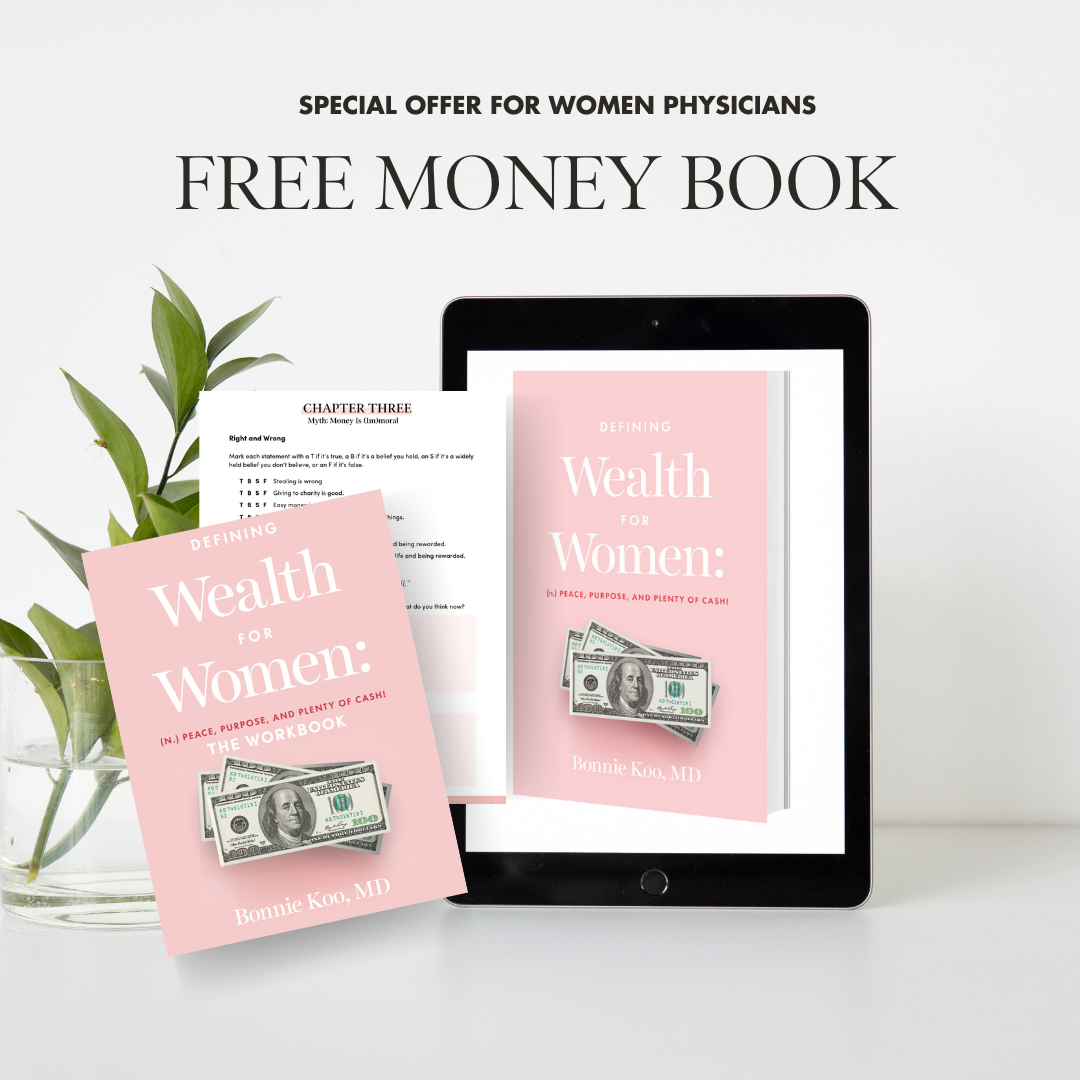

Get started on your journey to wealth by getting my FREE book- Defining Wealth for Women.
For media or speaking inquiries please click here.
For all other inquiries please click here.
